How to Create a Realistic Kitchen Remodeling Budget
Custom-built kitchens and remodels. Solid craftsmanship. Honest work. Guaranteed results. Top Quality Repairs
Start With the Kitchen You Actually Need
A kitchen remodeling budget is easier to build when it starts with the way the kitchen needs to function—not with a collection of finishes or a number pulled from a remodeling calculator.
For homeowners in Wilkes-Barre, Scranton, and throughout Northeastern Pennsylvania, kitchen remodeling costs can vary significantly. A modest update may involve replacing cabinets, countertops, and flooring, while a more substantial renovation could include changing the layout, moving plumbing or electrical, installing new appliances, and rebuilding portions of the room.
The most realistic budget accounts for both the visible improvements and the work behind the walls.
That means thinking about the scope first, then assigning money to the parts of the project that matter most.
Know What Kind of Remodel You Are Planning
Before estimating costs, determine whether the project is primarily a cosmetic update or a true renovation.
These two projects can look similar in photos but have very different budgets.
|
Remodel Type |
Typical Scope |
|
Cosmetic update |
Paint, hardware, lighting, minor finish changes |
|
Surface remodel |
Cabinets or cabinet refacing, countertops, backsplash, flooring |
|
Functional remodel |
Cabinets, flooring, appliances, lighting, plumbing or electrical improvements |
|
Full kitchen remodel |
Layout changes, cabinets, flooring, backsplash, appliances, plumbing, electrical, and structural work where necessary |
A homeowner replacing cabinet hardware and countertops does not need the same budget structure as someone removing walls and relocating the kitchen sink.
Defining the scope early prevents unrealistic expectations later.
Start With the Layout
Layout is one of the biggest factors affecting a kitchen remodeling budget.
Keeping the existing layout can simplify the project because plumbing, electrical connections, ventilation, and appliance locations may already be where they need to be.
Changing the layout can open up an outdated kitchen and dramatically improve how the space works. But moving a sink, dishwasher, refrigerator, range, or wall can introduce additional construction requirements.
For example, relocating a sink may involve plumbing changes. Moving a range may require electrical or gas work and changes to ventilation. Removing a wall may require structural evaluation and potentially additional electrical, flooring, and finish work.
This does not mean homeowners should avoid layout changes.
It means the budget should account for them from the beginning rather than treating them as minor additions.
Flooring Is More Than a Finish
Kitchen flooring needs to withstand daily traffic, spills, moisture, dropped objects, and regular cleaning.
The existing floor also affects remodeling costs.
If the new kitchen layout changes, portions of the floor that were previously hidden may become visible. Removing cabinets can expose unfinished areas, older flooring, or differences in elevation.
Common kitchen flooring choices include:
- Luxury vinyl
- Tile
- Hardwood
- Engineered wood
- Other durable flooring systems
Material selection matters, but installation conditions matter just as much.
A realistic budget should account for subfloor preparation if the existing surface is damaged, uneven, or unsuitable for the new flooring.
Backsplash Costs Are Usually Smaller, But Still Matter
A backsplash may represent a smaller portion of the total remodeling budget, but it has a disproportionate effect on the finished appearance.
Tile selection, layout, material, grout, edge details, outlets, and installation all influence cost.
A simple subway tile installed in a straightforward pattern will generally have a different labor requirement than a detailed mosaic or complex geometric pattern.
This is a good example of where design decisions can affect labor as much as material.
A backsplash does not have to be expensive to look intentional. Proportion, placement, and craftsmanship matter.
Don’t Forget Electrical and Plumbing
Behind-the-scenes work can be one of the biggest sources of unexpected costs in an older kitchen.
Homes throughout Wilkes-Barre, Scranton, and surrounding NEPA communities can vary considerably in age and construction.
Older kitchens may have outdated electrical configurations, limited circuits, older plumbing, or previous modifications that do not align with the current layout.
A remodel is often the point when homeowners discover these issues.
Electrical work may become necessary when adding appliances, improving lighting, relocating outlets, or upgrading circuits.
Plumbing may become necessary when moving sinks, dishwashers, refrigerators with water connections, or other fixtures.
These expenses may not be exciting from a design perspective, but they are essential to a functional kitchen.
Separate Needs From Wants
One of the easiest ways for a remodeling budget to grow is to treat every desirable feature as essential.
Before finalizing selections, divide the project into three categories:
Must Have
Items necessary for the kitchen to function properly or for the project to meet its primary goals.
Would Like
Features that improve convenience, storage, appearance, or efficiency but could be adjusted if necessary.
Upgrade
Higher-end finishes or specialty features that can be added if the remaining budget allows.
This creates flexibility without losing sight of the original goal.
For example, a homeowner may consider improved cabinet storage a must-have but a specialty appliance garage an upgrade. Someone else may have completely different priorities.
There is no universal definition of a “necessary” kitchen feature.
Think About Cost Per Decision, Not Just Cost Per Item
Some decisions affect several other parts of the project.
Changing the location of a sink, for example, may affect plumbing, cabinets, countertops, flooring, and electrical work.
Changing an appliance size may affect cabinet dimensions.
Changing flooring after cabinets have been ordered can create installation complications.
This is why major design decisions should be made early.
A realistic budget is not just a list of prices. It is a map of how one decision can influence another.
Final Thoughts
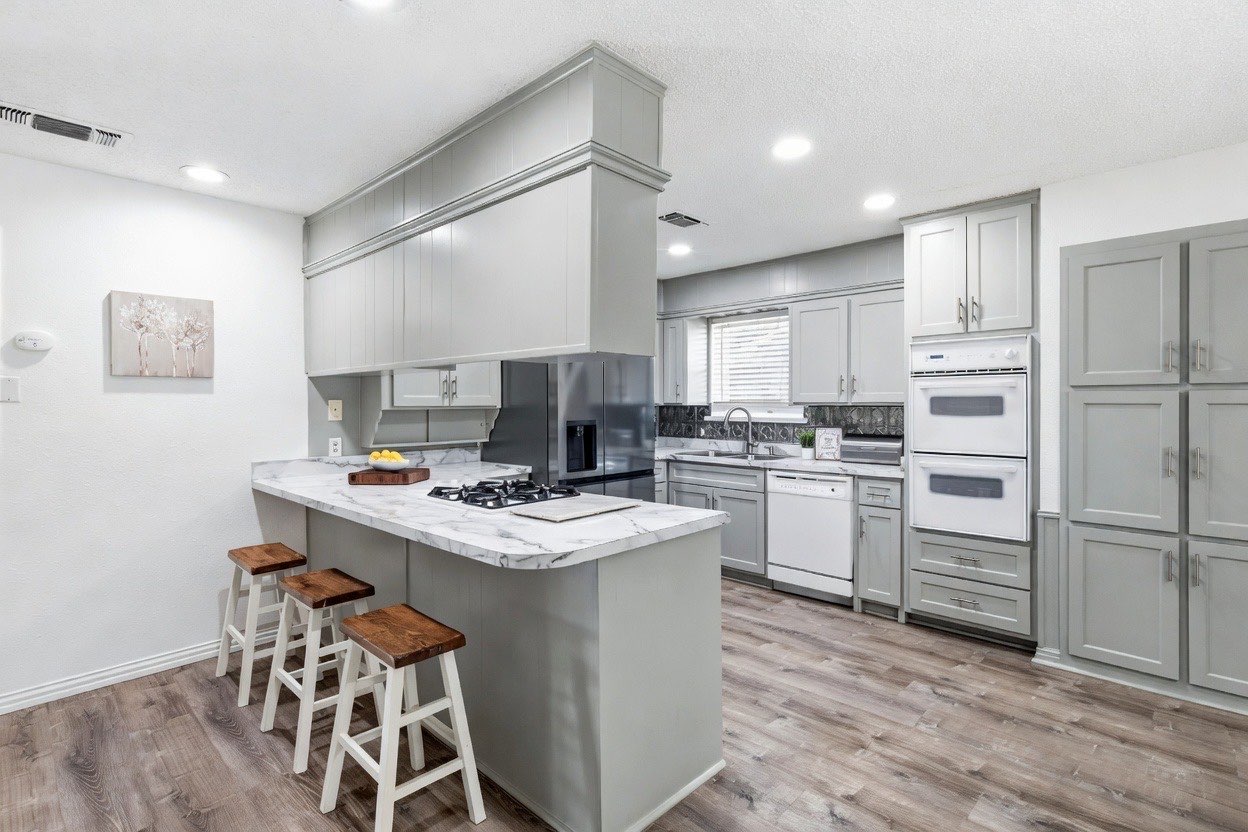
Creating a realistic kitchen remodeling budget starts with understanding the entire project rather than focusing on individual products.
For homeowners in Wilkes-Barre, Scranton, and throughout NEPA, that means considering the existing layout, cabinetry, countertops, flooring, backsplash, appliances, plumbing, electrical work, demolition, installation, and the condition of the home itself.
The most useful budget is not necessarily the one with the lowest number. It is the one that accurately reflects the work required to create the kitchen you actually want.
Start with function. Establish the scope. Separate necessities from upgrades. Account for the work behind the finishes. And leave room for the unexpected.
When those pieces are considered together, a kitchen remodeling budget becomes much less of a guessing game—and much more useful as a planning tool.