Is a Kitchen Remodel Worth the Investment?
Custom-built kitchens and remodels. Solid craftsmanship. Honest work. Guaranteed results. Top Quality Repairs
When Your Kitchen No Longer Works for You
Picture a typical morning in a NEPA home. Someone is trying to make coffee while another person is reaching around a crowded countertop for breakfast supplies. The refrigerator door barely clears the island, cabinet storage is overflowing, and the kitchen that once felt perfectly adequate now seems to slow everything down.
That is often when homeowners start asking an important question: Is a kitchen remodel actually worth the investment?
For many homeowners in Wilkes-Barre, Scranton, and surrounding areas, the answer can be yes — but not simply because a remodeled kitchen looks newer. A well-planned kitchen remodel can improve how the room functions every day, make better use of available space, address aging materials and systems, and potentially make the home more appealing to future buyers.
The key is understanding what you are investing in and why. A kitchen remodel tends to provide the most value when the improvements solve real problems rather than simply following a short-lived design trend.
The Value of a Kitchen Remodel Goes Beyond Appearance
A kitchen is one of the hardest-working spaces in a home. It is where meals are prepared, groceries are unpacked, dishes are cleaned, conversations happen, and people often gather throughout the day.
That means a remodel can have value even if you have no immediate plans to sell.
Consider what changes when a poorly arranged kitchen becomes more functional:
- Cabinets provide storage where you actually need it.
- Counter space becomes easier to use.
- Appliances are positioned more logically.
- Lighting improves visibility for food preparation and cleanup.
- Flooring can be replaced with a more durable surface.
- A backsplash can protect walls from moisture, grease, and everyday wear.
- An inefficient layout can be redesigned around the way your household actually uses the room.
These improvements may not show up as a single number on a home valuation, but they can make a noticeable difference in the home’s daily livability.
For homeowners who plan to remain in their property for many years, that practical value matters.
How Much Value Can a Kitchen Remodel Add?
There is no universal dollar amount that every kitchen remodel will add to a home.
The potential return depends on factors such as the home’s location, current condition, project scope, material quality, workmanship, and the expectations of buyers in the surrounding market.
A modest kitchen update and a complete layout redesign are also very different investments.
|
Remodeling Area |
Potential Benefit |
What to Watch |
|
Cabinet upgrades |
Better storage and refreshed appearance |
Avoid sacrificing quality for a trendy finish |
|
Countertops |
Improved durability and workspace |
Choose a material appropriate for daily use |
|
Flooring |
Better durability and updated appearance |
Consider moisture, traffic, and maintenance |
|
Appliance upgrades |
Better efficiency and functionality |
Make sure appliance sizes fit the layout |
|
Layout redesign |
Improved workflow and usable space |
Structural changes can increase project costs |
|
Backsplash |
Easier wall maintenance and visual improvement |
Choose materials that complement the rest of the kitchen |
The important distinction is between cost and value.
Spending more does not automatically create more value. A carefully planned remodel that improves functionality and uses durable, appropriately selected materials can make more sense than an expensive renovation filled with features that do little for the way the household actually uses the kitchen.
A Functional Layout Can Be More Valuable Than a Luxury Finish
One of the biggest mistakes homeowners can make is focusing entirely on finishes before considering the layout.
Beautiful cabinets cannot compensate for a kitchen where two people constantly bump into each other. Expensive countertops will not solve a lack of preparation space. A high-end appliance does not necessarily improve the room if it is positioned awkwardly.
The layout determines how the major elements of the kitchen work together.
That includes the relationship between:
- Refrigerator storage and food preparation areas
- Sink and dishwasher placement
- Cooking surfaces and countertop workspace
- Cabinets and frequently used appliances
- Walkways and seating areas
- Pantry or storage zones
A kitchen does not need to be enormous to work well. In many older homes around Wilkes-Barre and Scranton, the challenge is making an existing footprint work harder.
Sometimes that means changing the arrangement of the room rather than dramatically increasing its size.
When a Kitchen Remodel Is Probably Worth It
A remodel becomes easier to justify when it addresses problems you encounter repeatedly.
For example, remodeling may make particularly good sense if:
- Your cabinets no longer provide enough usable storage.
- The existing layout creates constant traffic problems.
- Counter space is inadequate for cooking and food preparation.
- Appliances are outdated or poorly positioned.
- Flooring is worn, damaged, or difficult to maintain.
- The kitchen has experienced years of piecemeal updates.
- Your household has changed and the current layout no longer fits your needs.
- You intend to stay in the home long enough to enjoy the improvements.
There is also a difference between wanting a nicer kitchen and needing a more functional kitchen.
When a remodel addresses both, the investment can provide value in more than one way.
Think About the Investment in Two Ways
A kitchen remodel has both financial value and personal value.
Financially, improvements can contribute to the home’s overall appeal and may help position the property more favorably when it eventually goes on the market. Buyers generally notice kitchens because they are expensive and disruptive spaces to renovate themselves.
Personally, the return can be even more immediate.
Imagine having enough room to prepare dinner without moving appliances out of the way. Imagine opening a cabinet and actually finding what you need. Imagine having a layout where the refrigerator, sink, and cooking area work naturally together.
Those are benefits you experience long before a future buyer ever walks through the door.
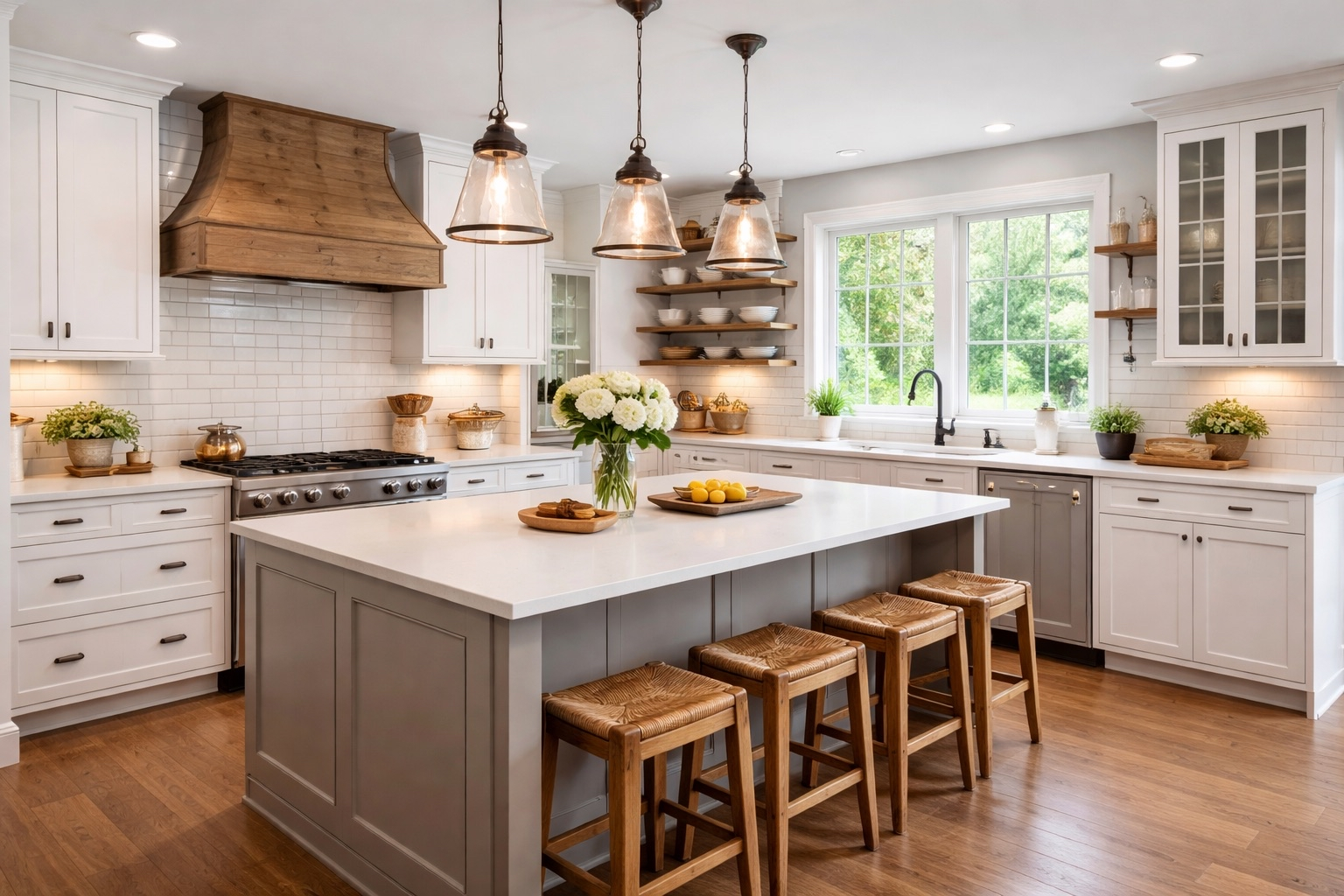
Quality Matters More Than Chasing Trends
A kitchen remodel is a long-term investment, so it is worth separating timeless improvements from temporary design trends.
That does not mean a kitchen needs to look traditional or conservative. It means major decisions should make sense for the home’s architecture, the household’s needs, and the amount of use the kitchen receives.
Durable flooring, well-built cabinetry, practical storage, quality countertops, and an efficient layout can remain useful regardless of what colors or design trends become popular five years from now.
For homeowners in NEPA, durability is especially important. A kitchen has to handle everyday traffic, seasonal changes, moisture, cooking, cleaning, and years of regular use.
What Should You Consider Before Spending?
Before committing to a kitchen remodel, look beyond the Pinterest board and consider the actual condition and purpose of your kitchen.
Your Budget
Establish a realistic budget based on the scope of work rather than starting with individual finishes. Cabinetry, flooring, countertops, appliances, electrical work, plumbing, labor, and unexpected conditions can all affect the final cost.
Your Long-Term Plans
If you expect to remain in the home for another decade or more, improvements that make the kitchen easier and more comfortable to use can carry significant personal value.
If you may sell relatively soon, it becomes more important to consider which improvements are likely to appeal broadly to prospective buyers.
Your Home’s Existing Character
A kitchen remodel should feel connected to the rest of the house.
An extremely modern kitchen in an older home is not automatically a bad choice, but the design should still feel intentional rather than disconnected from the property’s character.
Your Actual Habits
How do you use the kitchen?
Do you cook most nights? Entertain frequently? Need space for multiple people? Depend heavily on small appliances? Have children who use the kitchen independently?
The answers should influence the layout and storage decisions.
The Bottom Line
So, is a kitchen remodel worth the investment?
For many homeowners in Wilkes-Barre, Scranton, and throughout NEPA, it can be — especially when the remodel improves functionality, addresses aging or inefficient components, uses durable materials, and is planned around the home’s existing space.
The strongest kitchen remodels are not necessarily the most extravagant ones. They are the ones that solve real problems.
A better layout can make the kitchen easier to use. Better storage can reduce daily frustration. Durable materials can hold up to years of activity. Thoughtful updates can improve the home’s appeal when it eventually comes time to sell.
And perhaps most importantly, a well-designed kitchen can make an ordinary part of your home feel noticeably better every single day.
If your current kitchen feels cramped, inefficient, outdated, or simply no longer fits the way you live, remodeling may be more than a cosmetic upgrade. It may be an investment in the function, comfort, and long-term value of your home.